BATTLE OF ARRAS (IWM 1917 film) with a new Choral / Orchestral Score
Music by Laura Rossi
Conducted by John Gibbons
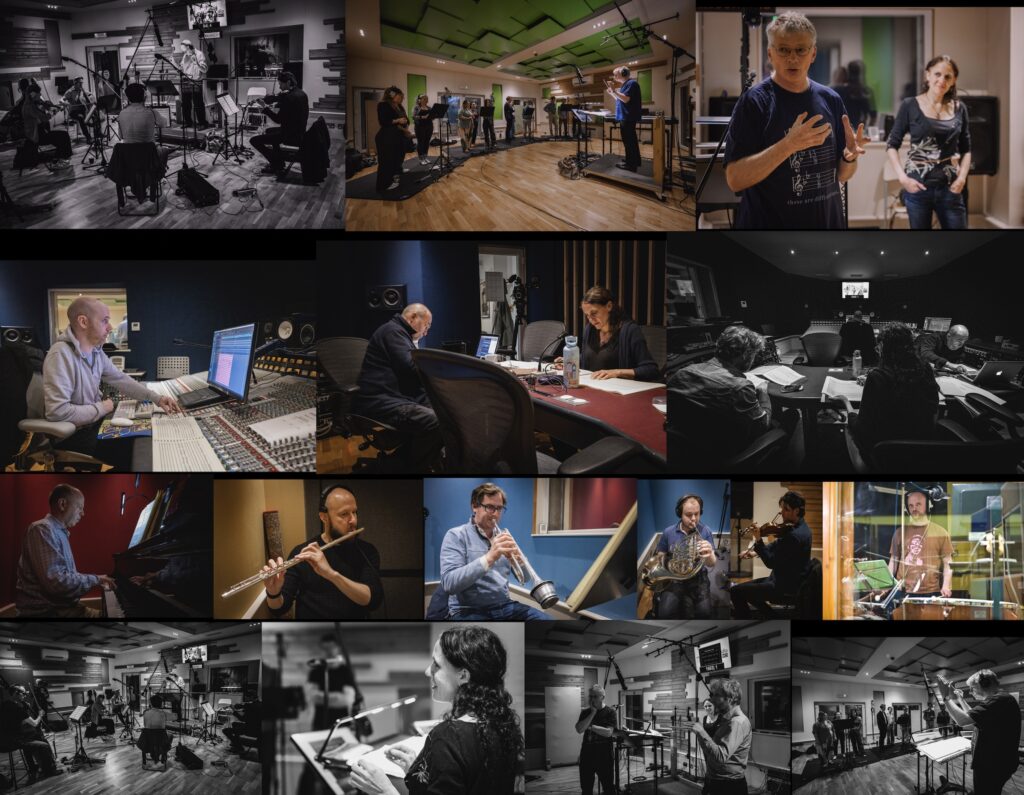
Recorded by The Chamber Orchestra of London & The Guildhall Session Singers
The third in the trilogy of official feature-length films (Somme, Ancre & Arras) restored by the Imperial War Museum & scored by Laura Rossi.
UK Premiere – BFI Southbank 3pm Sunday 12th April 2026
Music & Film Excerpts
‘Battle of Arras’ World Premiere at Pordenone Silent Film Festival, Italy, 8th October 2025
Performed by Orchestra da Camera di Pordenone & Coro del Friuli Venezia Giulia, conducted by Andrej Goričar.
Rehearsal at Pordenone
REVIEWS
The Imperial War Museums have restored 1917’s The German Retreat and the Battle of Arras; Laura Rossi has composed an astonishingly rich, poignant score, incorporating songs and poetry. This is embedded, but plotted, sometimes even you might say performed, frontline filmmaking. Raw but not unfiltered. There is pain, camaraderie, reflection, and devastation, but no chaos. The landscape of northern France is here ripped apart, and we know both how the grass will grow back, and what future horrors will advance and retreat in years to come. The screening was very powerful, almost reverent in tone. Rossi’s score was performed by Orchestra da Camera di Pordenone and Coro del Friuli Venezia Giulia, conducted by Andrej Goričar. My spine tingled when those voices soared to the top of the auditorium. As the camera panned up the derelict Arras Cathedral, and the train station too, in the moment it felt as if the theatre had too been transformed into some kind of monument.
Le Giornate del Cinema Muto 2025 – Pamela Hutchinson, Silent London
Made when the Great War looked like it might be winnable and has a propagandist purpose beyond earlier films in showing the changed momentum of the conflict to those back home. It is also historically significant for the events it memorialises, the techniques it uses to do this and its intent.. Geoffrey H. Malins was director of photography as he had been for the two Somme films and this film is another great technical achievement and awe-inspiring in the greater context. It didn’t feel triumphant though, more grimly determined to help complete the job and this was partly down to the excellence of Laura Rossi’s musical choices.
Laura has scored for the other films and was on hand to hear her new composition played in the Teatro Verdi by the Orchestra di Pordenone & Coro del Fruili as conducted by Andrej Goričar. Her score enabled us to really see the film, devoid of any post-facto contextualisation, in ways that were connected to the original intent. She allowed us a bit of both but underscoring the documentation on display to allow our own interpretation – a most historical musical agenda, incredibly effective and created.
Elements of poetry and songs of the period, from all sides, were used as connective themes but also providing contrapuntal lines to neutralise more pointed segments. It enabled us that more conscious consumption of the film than might otherwise have been possible. A sobering end to the day and brilliant work from all concerned.
Le Giornate Del Cinema Muto – Paul Joyce, Silent Film Blog
Recording Session – End Credits Sung by Neyland (WW1 veteran)
ABOUT THE FILM & MUSIC
The third in a trilogy of official feature-length films restored by the Imperial War Museum (Battle of the Somme, Ancre and Arras) all scored by Laura Rossi. ‘The German Retreat and Battle of Arras documents the British Army’s great offensive on the Western front during the Easter period in 1917. This third instalment in a trilogy of official films on the French and Belgian campaigns was the most visually successful, as evidenced by the new digital restoration undertaken in a collaboration between the London Imperial War Museum (IWM) and the University of Udine.
The images of the Battle of Arras were filmed by four operators (Geoffrey Malins, Harry Raymond, John McDowell & Herbert Baldwin) lead by Capitan J.C. Faunthorpe, officer of the military intelligence directorate and military director of the official cinematographers. An unusual feature of this documentary is its use of colour: hand coloured sections and red intertitles spotlight explosions while, to underscore realistic naturalism, blue is used for the river and sky, and brown for the ground. The score by British composer Laura Rossi for choir and chamber ensemble was inspired by poetry and texts written by soldiers who fought in the battle. In the film’s closing credits, we hear the recorded voice of a soldier talking about the songs he and his comrades sang, eventually breaking into song with these words: “When this wicked war is over” a very poignant ending to this moving film. Score supported by the David Lean Foundation.
Battle of Arras – Music by Laura Rossi
Having previously scored Battle of the Somme and Ancre, it’s been an honour to complete the trilogy of scoring these important historical films. I scored the Somme for full Symphony Orchestra, Ancre for Chamber Orchestra and Arras for Choir & Chamber Ensemble, as this film has more footage of local people, more battalions and more of the aftermath compared to the other films so I decided it would work well as a choral piece using poetry and text, mainly written by the Soldiers’ who were there, but a couple are written by people back home. I also arranged a few songs as part of the score and listened to Imperal War Musem recordings of soldiers talking about their experiences of war, and found this incredibly moving tape of a soldier “Neyland” who was at Arras talking about the songs they sang and he breaks into song singing “when this wicked war is over” so I decided to use this for the end credits and wrote an orchestral accompaniment for it – it’s an incredibly powerful and poignant ending to the film.
This film has some very moving scenes as it shows the aftermath of war, so I felt it would work well with music that enhanced this. My main aim with the score was to help make the film more moving and engaging to watch. When researching these films, I visiting the Somme Battlefields twice and discovered my Great Uncle Fred was a stretcher bearer and may well be in these films. I have his diaries and retraced his footsteps across the battlefields. This close personal connection to the film and the battle and reading his diaries helped give me a deeper understanding of what it must have been like to be there and helped me to write it from the soldiers’ perspective.
Performed by The Chamber Orchestra of London: Flute – Peter Robertson, Trumpet – Chris Evans, French Horn – Timothy Ellis, Percussion – Hugh Wilkinson, Piano – Huw Watkins, Lead violinist – Thomas Gould, Violin II – Mark Derudder, Viola – Helene Clement, Cello – Tim Hugh, Double Bass – Paul Kimber. Guildhall Session Singers: Artistic Director – Mike Roberts, Musical Director – Clare Wheeler, Soprano solo – Alex Moss, Alto solo – Scarlet Halton, CHOIR: Anni Delger, Abi Gilchrist, Clare Wheeler, Nicole Petrus-Barracks, Scarlet Halton, Alex Moss, Owen Butcher, Barnaby Wynter, Thomas Jesty, Charles Broad, Aidan May, Joe Lee. Conducted by John Gibbons, Musicians contracted by Gareth Griffiths, Score Prep: Michele Tacchi, Copyist: Simon Whiteside, Recorded at Master Chord Studio, Engineered by Ronan Phelan, Score mixed by Steve Parr. The composing and recording of the music was made possible by the generous support of The David Lean Foundation